| 60 months | FromChildren’s Language Development from 6 months to 8 yearsSome teaching points? Can the children in my target group do these highlighted things? Can use many descriptive words spontaneously (both adjectives and adverbs) *Knows common opposites: big-little, hard-soft, heave-light, etc *Able to count to ten *Speech should be completely intelligible *Should have all vowels and the following consonants; m,p,b,h,w,k,g,t,d,n,ng,y *Should be able to repeat sentences (containing up to 9 words) *Should be able to define common objects in terms of use (hat, shoe, chair) *Should be able to follow three commands given without interruptions *Should understand and use simple concepts of time such as ‘morning’, ‘afternoon’, ‘night’, ‘later’, ‘after’, ‘tomorrow’, ‘yesterday’ and ‘soon’ *Should be using long sentences and some complex sentences *Speech on the whole, should be grammatically correct |
| 6 years | *In addition to the above consonants these should be mastered: f, v, sh, zh, th, *Speech should be completely intelligible *Should be able to tell a story connected to a picture, seeing relationships between objects and experiences |
Sunday, July 23, 2017
Children’s Language Development from 6 months to 8 years

Marzano's Academic Language
Can I simplify the Marzano steps to learning new vocab so that we can use it in class


Academic Language:
Introducing topic vocabulary - to coincide with Wa Kitea
Theme: Performance, activities include:
- Making puppets
- Puppet theatre
- Play Big Book (The Ant and the Grasshoppers)
- Dress ups
- Ipads - making videos of performances
Vocab introduction (brainstorm and general discussion around meaning)
Choose vocab to focus on - Audience
Tell your partner what the word audience means?
Think, Pair, Share (use talk moves language - do you agree? Can you add to that for me?
Draw what the word Audience means to you…
Repeat steps 2 and 3 for another word - script
Use the words in conversations, writing, descriptions
Words become a part of our vocab
“I enjoyed it when the audience watched our performance” Lilly
“I could see that the people on stage were using a script” Danny
Saturday, June 10, 2017
CRP Cultural Resonsiveness
CRP presentation
Thinkings:
What an awesome day lots of great questions and really made me question my own practice
On the Surface Practice VS Real Cultural Responsiveness
I think we are all good at doing the things that are on the surface - saying the words and singing the songs. But there is so much more to consider and in considering this think about how our actions involve or push away our maori families. What it really left me thinking is:
Are there things that I could be doing in my classroom that fit well within Maori culture that would make a difference to ALL of my learners?
- Being respectful of where we have come from - our whakapapa. As a New Zealander this is really important to me but how can I include the whakapapa of the families in our classroom?
- The idea that the village raises the child. So how can I include my whanau more in the things that we do in class? How can I make sure everyone especially my Maori parents feel good about coming into class and being a part of our learning?
- How can I use Maori language in a way that it just becomes a part of what we do and how we talk? And does that result in better outcomes?
Using a theme in Wa Kitea
Presentation
Challenges
- Making sure that themes don’t get too arts and craftsy
- Finding activities that are not too over the top and too expensive to maintain
- More focused, excited groups
- Oral language is more focussed around a theme and extended through thinking about different ideas
- Not getting the same outcomes each week
- More parent involvement
- Can include topic areas that often find hard to fit in - science,technology
- Great for writing - gives them something exciting to write about
Wednesday, May 24, 2017
Effective Maths PD
24 May
Effective maths
Focus place value
Forwards backwards 1 10 100… crown with these on head 1 2 3 4 (+10) 15 25… (-10).... 35 25…
Using a 100 chart to visualise
Effective pedagogy in maths (pink book??)
After the game/warm up.. Using this time to think and to use… why are we doing this??
Number knowledge:
Basic facts
Place value
Forwards backwards
Number identity
Strategy:
Add sub’
mult div
Fract prop
PLENARY!
Make time for reflecting at the end...
Using digital tools up on projector
Whole class
10 whole warm up
30 Work out: groups..
20 plenary
Or
Flexible groups
10 Warm up
45 groups / 1 teacher 2 independent 3 independent… (2) sessions
5 min warm down
Why warm up??
Engage / Fill gaps / Front load / connections / integration / re-visit other lessons
Using language…
Do they know the right language? Do I know the right language to their level?
Getting them to notice and discuss numbers what is the odd one out?? T / F
Guess the counters in the cup… estimation…
Expectations?
What can they do now?
What do they find difficult?
Misconceptions might they have?
Achieve content ( will give you the basic)
Support resources
Cards / ordering numbers 1st card biggest wins...

How clear do you have their learning goals??
Sunday, May 21, 2017
Staff meeting Tuesday 16/05/17
Maths Testing
Testing needs to be ongoing - as you teach a unit of work with a group you can test that module and add that information on to Edge
- I have tested 2 modules but I have not put them onto edge - need to do more testing. This links well to the work that I have been doing with Susan with the groups
- some modules will not be done until later in the year when we do some of the other maths areas
website with some help on how to take the test and what each level looks like
http://www2.nzmaths.co.nz/Numeracy/ONPD/Intro/01.aspx
I also found this one which makes it easy to find activities for stages 1-4
https://nzmaths.co.nz/number-knowledge-lessons
I really like this one as I think the activities are set out really easily - I just think I need to go back now and do more testing so that I can see where more of the gaps are
Reading Testing
Watched PM testing video on a level 11. The sequence of this test was different to what I have been doing - useful training before next week.
I have been doing too much of a read through giving them information about the text. Whereas in the video they were only looking at the cover and talking it through. Then the student is to read the book through to themselves and retell the story - I have not been doing this stage so it is something that I have learnt. We talked a lot about what to record of their retell and I like the idea of taking some notes for each one instead of writing down every word. Then they read you the story.
As with most of these things we all saw the way the teacher was doing the running record differently
But it has made me see that i need to change a few things in the way I am taking the test so that I am consistent with the rest of the team.
Thursday, May 11, 2017
Maths observation and follow ups
https://docs.google.com/document/d/1fkENRX_2MrppQTI3Bm9pDY4XvieCwNvxY2DKIM2yq04/edit?ts=5914af4b
This was a good exercise but I wanted Susan to see more that I have been finding hard - so we talked through using more of the assessment and how my groups might change more frequently to fill in small gaps for different students
Going forward it does give me more confidence that I am on the right track with my maths programme. Using the new task boards has meant greater independence during Maths time and it was great that Susan reinforced that these are on the right track
Tuesday, April 4, 2017
Talk Moves - video
https://www.teachingchannel.org/videos/student-participation-strategy
love the revising idea - permission to change your mind. When you are confronted with new information you should change your thinking
Also love the I'm thinking the same as you symbol that the class were doing to eachother

This one has the turn and talk added in and I really like that as an added dimention
love the revising idea - permission to change your mind. When you are confronted with new information you should change your thinking
Also love the I'm thinking the same as you symbol that the class were doing to eachother
This one has the turn and talk added in and I really like that as an added dimention
Staff Meeting Maths and Reading
Linda Maths, Vanessa Reading

Linda's maths was not at our level but some good sites to visit for the kids.
Sunday, March 26, 2017
Teacher Inquiry
Reading - Inquiry Learning Networks and Spiral of Inquiry
Article provides a framework for teacher inquiry and gives an outline for why collaborative approach to teacher inquiry is important.
A framework for changing the experience of learners through new learning and new actions
The cycle involves six stages some of which I think have been done when we look towards our Inquiry this year.
- scanning
- focusing
- developing a hunch
- Engaging in new professional learning
- Taking new action
- Checking that a big enough difference has been made, and then re-engaging to consider what is next.
As I consider this towards my Inquiry into Wa Kitea I think I need to consider the first three steps as they were done last year and into the lead up to starting play based learning - what can I measure as the need to bring in play based learning? How can I use the data that I have to show that Wa Kitea has made a difference in their learning?
I know that Susan is doing a lot of study on Play Based learning so looking forward I will need my own plan towards my new professional learning
How will I show that I have made a difference and show it by obtaining valued outcomes for learners?
Monday, March 6, 2017
Wa Kitea - Learning through Play
At the beginning of this journey we were running 1.5hours of free play. We introduced planners and sharers and the whole make up of the session is changing.


As of Week 6 Term 1 this is what we are trying to do...
1 hour of focused Wa Kitea time first thing in the morning.
Planners and Sharers sit in a group on the mat and plan what they are going to make/do before going off and picking up resources - means the planner gets help with the planning rather then being left to do it by themselves
Wa Kitea has a theme for the week - "monsters" or "pirates" this gives the children more focus and they are excited about building something for a reason.
These photos show a group working on their 'monster' one is sorting the chalk the others are creating their creture


Subscribe to:
Posts (Atom)
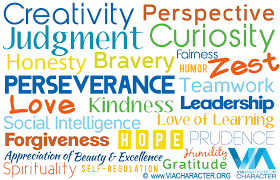
Character Strengths
https://nziwr.co.nz/shop/ How can focussing on our character strengths help us to improve learning? Self esteem? Those who are not ...
-
 Linda Maths, Vanessa Reading Video Jill Eggleton, about guided reading re-affirmed what I am doing for guided reading. Raised question...
-
Planning Week 2 - Specifically Reading https://docs.google.com/document/d/1MeIsbaBpLNGAjbpwvJOnxO3TnVZtoEdQlACR76w5tRc/edit Planning W...