Tuesday, October 22, 2019

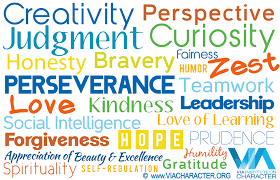
Character Strengths


https://nziwr.co.nz/shop/

How can focussing on our character strengths help us to improve learning?

Self esteem?

Those who are not traditionally good at learning will have some great character strengths

Positive self talk - I am curious

Focussing on what I am good at rather then deficit model thinking

How can I introduce into NE classroom - active noticing when characteristics are shown - I really like the way you were kind


Thursday, March 7, 2019

Digital Technology Integration PD


Not a new curriculum - just a change in where things sit

e-Learning/ICT Capability versus Digital Technologies

Going forward - how can we integrate more digital learning into what we are doing?

- Digital options for follow up activities
- Children sharing with Seesaw
- Independence with Ipads

Wai Ako Teacher only day

1.7b Whakarongo mai Listen to me


Really fun activity for the class with great actions to go with the commands. A great way to gain confidence using Reo in the classroom with commands - maybe 1 per week

1.7b Whakarongo mai Listen to me
Lyrics Translation


Whakarongo mai, kōtiro mā, whakarongo mai
Titiro mai, kōtiro mā, titiro mai
E tū, kōtiro mā, e tū
Haere mai, kōtiro mā, haere mai
E noho, e tama mā, e noho
Kia tau, e tama mā, kia tau
Hoihoi, e tama mā, hoihoi
Whakarongo mai, tamariki mā, whakarongo
mai
Titiro mai, tamariki mā, titiro mai
E tū, tamariki mā, e tū
Haere mai, tamariki mā, haere mai
E noho, tamariki mā, e noho
Kia tau, tamariki mā, kia tau
Hoihoi, tamariki mā, hoihoi


Listen to me, girls, listen to me
Look this way, girls, look this way
Stand up, girls, stand up
Come here, girls, come here
Sit down, boys, sit down
Settle down, boys, settle down
Be quiet, boys, be quiet
Listen to me, children, listen to me
Look this way, children, look this way
Stand up, children, stand up
Come here, children, come here
Sit down, children, sit down
Settle down, children, settle down
Be quiet, children, be quiet

Restraint Training

Not Restraint training - more how to defuse a situation so that it doesn't become a restraint situation


Adrenaline and Dopamine inhibit the child's ability to think clearly, or make good decisions

Important to intervene before behaviour happens

Keep yourself safe - don't get yourself into a situation where someone could get hurt from being restrained. Or don't intervene and compromise your personal safety

Incredible Years Teacher Course - working doccument


My Goal - Using positive calming strategies to encourage positive behaviour.

The six sections of the pyramid are broken down into:

-      - Building Positive Relationships
-       Being a Proactive Teacher
-       Giving Attention – Encouragement       and Praise
-       Motivating through incentives
-       Decreasing inappropriate behaviour
-        Negative consequences

         Session 1 - Building Relationships - the start of the Behaviour Plan:
 Building strong relationships is the most important thing “a nurturing teacher-student relationship built on trust, understanding, and caring will foster students’ cooperation and motivation, and promote their learning, social and emotional development, and academic achievement at school” 


Student:
Strengths:
Behaviour:
Positive Relationship Strategies:
Nate
Articulate
Social
Good leader
Loves to help
Passionate
Impulsive
Hits others
Impatient
Descriptive commenting, commenting without making judgement. “I can see your blue bricks…” “you have blue bricks on the top” Takes the pressure off less verbal students to respond

Morning greetings

Getting to know family

Rocky
Social
Good academically

Impulsive
Leads others into trouble
Doesn’t share
Campbell
Good sense of humor
Articulate
Enjoys others
Impulsive
Hits others
Sean
Social
Good sense of humor
Quick witted
Sneaky
Unkind words to others
Jack
Social
Physically active

Too physical
Doesn’t share
Drawn to other difficult behaviour


Session 2: Giving Attention, Encouragement and Praise

There are many skills that can be coached by a teacher: social, emotional, academic and persistence skills. Coaching academic skills can be done by simply naming the things that the students are doing while they work. Giving them the language (can be very beneficial for ESOL students) and is not demanding anything from the student, as questions would. Through social coaching you can label the skills they a showing and praise them at the same time e.g. I can see that (child) is sharing with (child), great job this way you both get a turn. Coaching persistence can give the child the encouragement they need to keep going e.g. I can see you are really focusing so well, even though it's getting tricking you are still working on those maths questions and now you're halfway

Session 3: Motivating through incentives
Incentives can be a really powerful tool for a class, for a group, or an individual. Working with a student and their family to come up with an individual incentive system and goals when necessary is so much more powerful than me just thinking about what they need to work on and what I could give. This gave more ownership to my students, who had already come up with the positive things they needed to do instead of the undesirable behaviour

Gifted and Talented PD

Gifted children present themselves in different ways

Look at the world through a different lense

Looking at concepts rather then topics - need to know the connections between things

Often socially awkward - struggle relating to peers their own age

not always the top of the class

Seemed like a very Inquiry based approach

Need to change our focus questions to be more concept based - can I take this idea and change something in my life


Yolanda Soryl - Phonics

Primary Phonics
Fundamental for early reading 

and writing

'Phonemic awareness is fundamental to early success in reading and writing … An understanding of phonics also underpins children's literacy learning. Children need to learn, through deliberate, focused instruction, which letters represent which sounds.' — Effective Literacy Practice in Years 1–4, (2003, p.32), Ministry of Education, Wellington.

Understanding Phonics

It is at word level that many children fail to grasp the skills necessary to recognise or sound out unknown words for reading and spelling. This is where the explicit teaching of the word level skills of phonic and graphic knowledge can quickly empower children to read and write.
Of course, learning to read and write is not just about getting the words. Children need to learn how to use meaning and structure too so that everything they read and write looks right, sounds right and makes sense. They need to have a range of strategies and be able to work at word, sentence and text levels. Working at word level using phonics is just one part of literacy development, but it is particularly vital for beginning readers and writers.
It is important that teachers not only understand the necessity of explicitly teaching at word level by including phonics in their balanced literacy programmes, but also how to teach it effectively. Having trained thousands of teachers both nationally and internationally since 2000, Yolanda Soryl is New Zealand’s foremost phonics training provider.

Start at stage 2 - go through each letter
Break into 2 groups:
Lower - go through stage 2 again
higher - go onto stage 3 - end sounds

Lesson flow for Stage 2
Hear - flashcards of sound - I say you say

Read - word story with the initial sound

Write - practise writing the grapheme on your whiteboard

Monday, October 29, 2018

Playbased learning in a NE Classroom

Shareen is a ECE lecturer at AUT and she is teaching a class that was looking at transitions and how play is intergrated into the year 1 setting. I helped out by helping her  make this video


Monday, October 22, 2018

Wa Kitea Outdoors

Rain or shine Wa Kitea in the garden and trees up the front of the school by Room 20 and 21.

The Trick is not over teaching so that the children come up with their own ideas and try new things without us suggesting too much


Wednesday, September 12, 2018

Treaty of Waitangi Training

  • That everyone will be feeling differently about the Treaty.
  • None of us were there
  • Article 2: Land “Rangatiratanga” - uphold authority over their lands
  • Crown the right of preemption in land sales
  • The crown paid little money for any of the land purchases
  • Even though Maori fought with the Crown over land - they still did not truly “Own” their land
  • Ignorance of history leads to discrimination
  • This is our History
  • Stereotypes: Discrimination/ Racism / Unconscious Bias / Stereotypes
  • What is around you that you don’t notice…
  • How Maori are portrayed in the media? What stories do you hear?
  • Be alert with the media // Is what you’re seeing stereotypical??
  • Te Kaea (Maori News)

STEAM

What is ?

  • Science Technology Engineering Arts Maths

  • Problem Solve / Collaborate = producing people who can

  • Diverse and Holistic approach to the world

  • Teaching with / using Habits of Mind

  • Kath Murdoch: We are born curious creative and imaginative
    • Parents and teachers, teach this out of children
      • The Power of Inquiry (Book)

  • Just let children DO... leave them alone to explore

  • I wonder how… instead of closing it off to a WALT ignite the thinking

  • Open up Science / Maths to girls in your class

  • Keep it real & keep it authentic = keep it simple

  • Learners need to be having fun - explore - play

  • Not just to stop in year 6

  • Diversity - To be successful

  • Seek out Experts

  • Cultivate curiosity - I wonder…

  • Children being able to choose the best tool for the job

Monday, July 30, 2018

Play based learning article

Excerpt from :
A Multicultural Perspective on Play and Learning
in Primary School
Ole Fredrik Lillemyr • Frode Søbstad •
Kurt Marder • Terri Flowerday
Published online: 29 January 2011
 Springer Science+Business Media B.V. 2011

Abstract In the school’s conception of learning, the cultural aspect of children’s
play has often been lacking. In different countries, it is emphasized that play is
important for learning (Dockett and Fleer, Play and pedagogy in early childhood:
Bending the rules. Harcourt Brace & Comp, Sydney, 1999; Lillemyr, Nordisk
Pedagogik/Nordic Educational Research 22:38–52, 2002; Wood and Attfield, Play,
learning and the early childhood curriculum, 2nd ed. Paul Chapman, London, 2005).
Recent research has focused on social aspects and friendship as fundamental elements
in learning activities. A sense of relatedness to culture is strongly linked to
aspects of self-determination, respect, and sense of competence. The socio-cultural
theory perspective is of special relevance in this concern, as presented in the theories
of Vygotsky and Deci & Ryan (Deci and Ryan, In: Efficacy, agency, and selfesteem.
Plenum Press, New York/London, 31–49, 1995; Vygotsky, Thought and
language. The M.I.T. Press, Cambridge, 1986), as this perspective is essential in
promoting motivation for all students, irrespective of background. In a cross-cultural
research study of student groups in Australia, USA ,and Norway; the intention
was to identify cultural profiles among student groups on their interests in play,
learning preference, self-concept and motivational orientation, applying scales, and

Article based upon a paper presented at EECERA Annual Conference in Stavanger, Norway, September,
2008.
O. F. Lillemyr (&)  F. Søbstad
Queen Maud’s University College of Early Childhood Education, Trondheim, Norway
e-mail: ofl@dmmh.no
K. Marder
University of Western Sydney, Sydney, Australia
T. Flowerday
University of New Mexico, Albuquerque, NM, USA
123
IJEC (2011) 43:43–65
DOI 10.1007/s13158-010-0021-7

interviews. Similarities and differences were documented among Aboriginal, Navajo,
and Sa´mi students, compared with non-indigenous (majority) students, in interest in
free vs. directed play and learning, aspects of self-concept, and motivation. A tendency
of indigenous students to favor a traditional, teacher-directed concept of
learning was found, compared to non-Indigenous students. Furthermore, indigenous
students had a significantly lower self-concept, compared to non-indigenous students
(presented elsewhere, Lillemyr et al., Students’ relatedness—a neglected aspect of
motivation and learning? AARE International Conference in Brisbane, Queensland,
Australia, 2009). In Norway, teachers of indigenous students used play to a lesser
degree than teachers of majority students. Teachers in Arizona and Australia seldom
used play in the classroom. Our research indicates friendship and sense of competence
are important for students’ motivation to participate and achieve in school, partly
confirming results from other research studies. The authors found a sense of relatedness
to be quintessential in this concern. Educational consequences for play and
learning in multicultural early years’ education are suggested.


Keywords Interest of play  Interest of learning  Self-concept  Sense of
relatedness

Introduction: A Socio-Cultural Perspective on Play and Learning
Theory and research have increasingly argued that social aspects such as friendship
and sense of relatedness are fundamental in the development of cultural identity and
learning (Ladd 2007). For these reasons, the socio-cultural theory perspective is
particularly relevant in this research, as presented variously by Vygotsky (1986) and
Deci and Ryan (2000). Play is considered an important arena for children in any
culture (Huizinga 1955) and a crucial component in children’s varied aspects of
development (Singer et al. 2006). Nonetheless, the sources of play from real-life
experiences will depend on cultural characteristics. In order for social learning to take
place, social motivation is often needed to acquire intrinsic motivation. Play is an
essential component in the socio-cultural theory of Vygotsky (1986) who argued that
play is a vital element contributing to language development and conceptual meaning.
In play situations, children stretch out to the proximal zone of development (ZpD)
through the guidance of peers, or when guided by the educator. What a child is capable
of doing with help from the teacher or a more experienced peer, has often been termed
scaffolding (Berk and Winsler 1995). Through experiences in play, the child acquires
social and cognitive capabilities important for learning, and will also develop a sense
of relatedness. It is assumed that all individuals have a need for feelings of belonging
to a group or culture, defined as a sense of relatedness (Deci and Ryan 1995). The
authors think this need is well established through children’s play, as it also should be
in school learning. The point is that a strong sense of relatedness contributes to a
strong intrinsic motivation in play and learning.
However, in relation to Vygotsky’s theory, it is emphasized that the tools,
interventions, and language of one culture may be significantly different from
another, and so education must situate learning within the appropriate social and
cultural contexts (Salomon and Perkins 1989). For example, among indigenous
people, oral stories and tradition have a stronger meaning than among nonindigenous
people (McInerney 2006). Emphasizing children’s play, as relevant both
for its own sake and for its relation to learning, as in a socio-cultural theory, means
that the challenges of integrating indigenous and non-indigenous students in a
majority education system have to be extensively problematized. In play, children
take control and participate deliberately. In some cultures, observing and listening
when participating in activities are part of that culture’s tradition (Nystad 2003;
Rogoff et al. 2003). In this sense, human development can be seen as a cultural
process, with consequences for play and learning (Rogoff 2003).
A Broad Perspective on Learning
The relevance of play to learning and development has also been claimed by others
(Bateson 2000; Levy 1978). The recent research literature has argued that children’s
play can promote learning (Brock et al. 2009; Singer et al. 2006). These
perspectives are of relevance for early childhood education and care institutions
(ECECs) when attempting to provide quality learning environments. Moreover,
motivation and learning are interrelated not the least through the social aspects,
especially in play (Lillemyr 2007; Rogers and Evans 2008). Since learning is central
46 O. F. Lillemyr et al.
123
to ECECs as well as primary schools, a broad perspective of learning seems
reasonable, not the least in addressing the concept of life-long learning (Lillemyr
et al. 2001; Wood and Attfield 2005). In Norway, reforms and changes in Acts and
frameworks for ECECs and schools in recent years have addressed these trends
(Ministry of Education and Research, 2006a, b). From one point of view, the
reforms in Norway can be considered to be focusing on motivation, primarily
because of the emphasis on children’s play (Lillemyr 2002). The same tendencies
attempting to include play to ensure children’s engagement can be seen in countries
such as Great Britain, Australia, and Sweden (Bennett et al. 1997; Dockett and Fleer
1999; Samuelsson and Carlsson 2003).
Based on research, it seems reasonable to assume that there would be a close
relationship between children’s interests in play and their interests in learning, and
that these are closely related to self-concept and motivation (Lillemyr 2001).
However, social aspects such as sense of relatedness often are neglected aspects of
motivation and learning, even within socio-cultural perspectives (Reeve et al. 2004).
For young children, social learning concerns relationships with friends and the
extent to which they feel competent and related, as stated by Wentzel (1996, p 1):
The social worlds of children are pervasive and influential part of their lives at
school. Each day in class, children work to maintain and establish
interpersonal relationships, they strive to develop social identities and a sense
of belongingness, they observe and model social skills and standards of
performance displayed by others, and they are rewarded for behaving in ways
that are valued by teachers and peers.
The socio-cultural perspective of play and learning is important in all cultures, as
children in all cultures seem to play. There is a system of mediating knowledge and
skills from one generation to the next, although cultural differences can be found
(Salili and Hoosain 2007; Samuelsson and Fleer 2008). However, it is a well-known
fact that attitudes toward school learning vary considerably between cultural groups.
In Brooker’s interesting ethnographic investigation (Brooker 2002), the focus was
directed on learning experiences in a small group of children in reception classes
(4 year olds). It was found that children gradually adapt to school learning and
develop learning cultures, and it was documented that the home and school learning
environments are linked. Brooker focused on how social and cognitive gains define
children’s success as ‘‘pupils’ or ‘‘learners.’’ Providing all children with optimal
chances to achieve was found to be a challenge. Ethnicity was a factor of
importance in her study although from a general, multicultural point of view rather
than an indigenous aspect. Brooker discusses the importance of inviting children to
participate in class, as this will be repaid in many ways. Even though Brooker’s
research focuses on younger children than those in the present research study, it
illustrates the complexity of researching learning in school in relation to quality.

Sunday, June 24, 2018

Amy and Sam Collaboration and planning


Dairy Flat Visit

Dairy Flat Play Based Learning


Start with 20min oral language


Take away each day we have 18 people here and 4 are going into the cloakbay.


My photographer today is… and I would like you to take 5 photos
Fairy or Army booklets adding words then writing their own story


Writing mostly done as reporters


Like the code for checking writing

Independent activities but all individual boxed activities - not much scope for their own. Liked some of the ideas to get more writing - will think this through with Sam

Saturday, May 26, 2018

Beyond National Standards

Workshop - Tauranga School

Not that useful - about where the principal came from and planning

Tauranga School Inquiry Journey

Exciting and cool to see schools doing some cool stuff

Feels like going back to old days inquiry where you have an outcome where the students create something to make their environment better


Workshop - environments

Make a list of the activities that you would like to achieve in the space

What furniture do you need to need - teaching tables etc

create zones to move between
Kiwi - quiet zone
Fantail Zone - social zone mat area
Kea Zone - discovery area

Loved this workshop got some cool ideas for our new space

Monday, May 21, 2018

Assessment and Reporting Group

Thursday 17th May 2018 - Assessment and Reporting Group Meeting

This afternoon the newly formed Assessment and Reporting group met to begin discussions on how we want to change our assessment and reporting styles with the abolishment of National Standards.  

In attendance were Gary, Glenys, Amy, Vanessa, Nikki, Linda, Susan, Joanne and myself.  

Gary started by explaining the Ministry’s position on the scrapping of National Standards including the expectations for reporting to the Ministry that are still in place and legislation reform.  He then initiated discussion around the concept of why we wanted to change the way we do things at Torbay. We split into a couple of groups and made notes on this question.

Upon coming back together it was evident that groups shared some similar ideas with some caveats in place, for example we all wanted to stop labelling children as Well Below, Below, At etc.  but identified a need to still be honest with parents about a child’s progress. There was consensus on making sure that changes did not add to teacher workload and discussion on involving the community, including students, on what reports may look like.  Topics including anniversary reporting, and assessing and reporting on the wider curriculum were also discussed.


Our next steps are to consider how to consult with colleagues and our wider community and to research into how other schools do their assessment and reporting.

Character Strengths

https://nziwr.co.nz/shop/ How can focussing on our character strengths help us to improve learning? Self esteem? Those who are not ...